
Introduction
BIM enables professionals to coordinate data about a project from design through construction and operation.
This Master's Degree is designed to convert engineers, architects and constructors in technological leaders and BIM Managers in the infrastructure industry. Moreover, this programme aims at building the capacity of organization and professionals in the fields of BIM, GIS and the practical application of Information Management and Digital Twins for more efficient construction business and successful AEC sector.
Registration Form
Course Info
Block 00
WELCOME TO THE TRANSFORMATION
Institutional Classroom
Institutional Classroom In this section, you
can learn more about ZIGURAT and keep up
to date with the latest news. You will also
find tutorials on how the Virtual Campus
(also known as Canvas) works.
- Learn how to browse Canvas ZIGURAT
- Events
Additional Resources Classroom
In this classroom, you will find
complementary training materials offered
by ZIGURAT, information on possible
additional certifications awarded by our
partners, as well as resources that they
place exclusively at your disposal.
- Programme description
- Library
- Masterclasses Partners Certifications and Resources
- Introductory courses to the Programme
- How to obtain Software Licenses
- Equipment and Software Requirements
Programme’s Classroom
In this classroom, you will find your master’s
Programme Guide and Calendar, as well as
access to its Inaugural Conference.

Welcome Week
You will also have access to
resources that will help you to
become an excellent digital student.
Before embarking on the programme, you will be granted access to leveling courses. These courses
are specifically designed to enhance your training and ensure a consistent knowledge base among
all students.
- BIM Fundamentals
- Introduction to Revit
- Introduction to Archicad
- Introduction to Synchro
Block 01
ADVANCED BIM MODELING (CHOOSE YOUR PATH)
This block consists of three modules that systematically introduce participants to the
BIM ecosystem in construction while aligning with ISO 19650 standards for information
management. The curriculum covers fundamental BIM applications across the built
environment and develops elementary knowledge of 2D/3D digital solutions, with a
focus on implementing ISO 19650 workflows for collaborative design, delivery, and asset
lifecycle management. Participants will gain comprehensive knowledge of mainstream
BIM practices through theoretical foundations and hands-on exercises, including technical
report development and BIM deliverable production using core 2D drafting and 3D
modeling principles, all while adhering to ISO 19650 requirements. The program emphasizes
practical application through real-world case studies and demonstrations of digital
workflows, ensuring participants develop competency in standardized BIM processes and
documentation that meet global industry practices for the built environment. The evaluation
of the participants is based on the delivery of technical reports and BIM deliverables, mainly
in the A&C Building Designer environment. Demonstration of artifacts from all software
platforms will also take place.
- Learn how to browse Canvas ZIGURAT
- Events
- M1.
- U1/ BIM in the AEC Industry.
- U2/ BIM Key Concepts & Overview
- M2.
- U1/ Introduction to BIM for Roads & Highways.
- U2/ Introduction to BIM for Rails & Metros.
- U3/ Introduction to BIM for Tunnels & Bridges.
- U4/ Introduction to BIM for Subsurface Utilities.
- U5/ Infrastructural Buildings and Facilities.
- M3.
- U1/ 2D Authoring Platform Training.
- U2/ 3D Authoring Platform Training.
Block 02
BIM FOR CONSTRUCTION
This block consists of six (6) specialties that form the technical core of the program,
designed to enhance participants’ mastery of cutting-edge BIM software platforms. Each
path combines theoretical knowledge with hands-on software workshops to develop
advanced technical and authoring competencies. Upon completion, participants will be
capable of interpreting engineering drawings, enriching BIM models with critical construction
data, modeling complex structures, producing IFC (Issued for Construction) documentation,
and generating accurate Bills of Quantities from BIM models. The curriculum ensures active
learning through targeted exercises and real-world case studies, with participants selecting
one specialization path from the following: Roads and Highways; Railways and Metro Lines;
Tunnels and Bridges; Subsurface Utilities; Buildings; or the new Advanced BIM Modelling:
Geotechnical Construction path, which focuses on geotechnical data integration, soilstructure
interaction modeling, and underground construction simulation.
- B2A. ROADS & HIGHWAYS
- M0.
- M1.
- U1/ Introduction to Roads And Highways.
- U2/ Introduction to Openroads Designer.
- U3/ Calculation Techniques.
- M2.
- U1/ Introduction to Roads And Highways.
- U2/ Introduction to Openroads Designer
- U3/ Calculation Techniques.
- B2B. BRIDGES & TUNNELS
- M0.
- M1.
- U1/ Road Elements.
- U2/ Embankment Modeling.
- U3/ Introduction to Bentley Openroads Software Fundamentals.
- M2.
- U1/ Types of Bridges.
- U2/ Bridges Terminology.
- U3/ Introduction to Bentley Openbridges Software Fundamentals.
- M3.
- U1/ Cross Sections for Underground TBM Tunnel.
- U2/ Cross Sections for Underground Conventional Element.
- U3/ Cross Section Elements for Cut & Cover Tunnels.
- M4.
- U1/ Pier Lines.
- U2/ Substructure.
- U3/ Superstructure.
- U4/ Bridge Accessories.
- M5.
- M6.
- B2C. RAIL & METRO LINES
- M0.
- M1.
- U1/ Rail Types.
- U2/ Rail Terminology.
- U3/ Introduction to Bentley Power Rails Software Fundamentals.
- M2.
- U1/ Engineering/Technical Introduction.
- U2/ Scope Definition.
- U3/ Calculation Techniques.
- M3.
- U1/ Track Horizontal Alignment.
- U2/ Track Vertical Alignment.
- U3/ Rail Cant (Curves And Super Elevation).
- M4.
- U1/ Track Structure Design.
- U2/ Embankment Modeling.
- U3/ Track Component and Materials.
- M5.
- U1/ Definition of Special Trackworks.
- U2/ Turnouts and Crossovers.
- U3/ Special Trackwork Layouts.
- M6.
- B2D. SUBSURFACE UTILITIES
- M0.
- M1.
- U1/ Classification of Utilities and Scope Definition.
- U2/ Wet Gravity & Pressurized Systems.
- U3/ Dry Utilities.
- U3/ Dry Utilities.
- U4/ Introduction to Bentley Openroads Sue Software Fundamentals.
- M2.
- U1/ Gravity Nodes Features & Gravity Pipes.
- U2/ Pressurized Networks Pipes & Fittings.
- U3/ Modeling Pumping Stations/ MEP/Other structures.
- U4/ Modeling Dry Utilities.
- M3.
- U1/ Drainage Nodes/Conduits.
- U2/ Non-drainage Nodes/Conduits.
- U3/ Dry Utility Trenches & Components.
- M4.
- U1/ Creating Utilities from Graphics and Excel Data.
- U2/ Design Coordination.
- U3/ Reporting and Tables.
- M5.
- U1/ Generic Structures.
- U2/ Plant Rooms.
- U3/ Generic MEP Equipment.
- M6.
- B2E. BUILDINGS
- M0.
- M1.
- M2.
- M3.
- M4.
- M5.
- M6.
- M7.
- B2F. ADVANCED BIM MODELLING: GEOTECHNICAL CONSTRUCTION
- M0.
- M1.
- M2.
- M3.
- M4.
- M5.
- M6.
- M7.
Block 03
BIM FOR CONSTRUCTION
This block comprises eight (8) modules that establish a rigorous framework for mastering BIM-driven construction operations and next-generation project controls through digital workflows.
Participants will develop advanced competencies in leveraging BIM as the central data backbone, integrated with Digital Twin technologies for real-time performance monitoring and AI-powered
analytics for predictive decision-making across the project lifecycle. The curriculum specifically focuses on transforming traditional construction management through automated digital workflows that
synchronize design intent with field execution, employing IoT-enabled progress tracking, cloud-based collaboration platforms, and machine learning-enhanced risk modeling. By combining these digital
construction methodologies with core BIM management principles, participants will learn to optimize resource allocation, validate schedules through 4D simulation, automate quality control checks,
and implement closed-loop feedback systems between physical and digital project environments. The program emphasizes practical mastery through industry case studies and hands-on exercises that
replicate complex, data-driven construction scenarios, ensuring graduates can immediately apply these integrated BIM and digital workflow solutions to enhance operational efficiency, cost control,
and project delivery certainty in real-world built environment projects.
- M1.
- U1/ Project Specification & Documentation.
- U2/ BIM Execution Plan Module.
- U3/ Work Breakdown Structures (WBS).
- U4/ File and Object naming Convention.
- U5/ BIM Library & Data Requirements.
- M2.
- U1/ Introduction to Scope Management.
- U2/ BIM Based Scope Management Workflows.
- U3/ Bill of Quantities.
- U4/ Methods of Measurements and Quantity Surveying Rules.
- U5/ BIM Library, Data Requirements and Quantification Process.
- U6/ BIM Tagging.
- U7/ Variations and Changes.
- M3.
- U1/ BIM Authoring Quality Control Methods.
- U2/ Data Quality.
- M4.
- U1/ Integrated Infrastructure Construction.
- U2/ Visualization Methods.
- U3/ Coordination Requirements.
- U4/ Clash Detection & Conflicts Resolution.
- U5/ RFIs and Discrepancy Identification.
- M5.
- U1/ Planning Basics and Scheduling Fundamentals.
- U2/ Schedule Simulation/4D (4D solution).
- U3/ Advanced BIM-based Planning.
- U4/ Site Logistics and Constructability.
- M6.
- U1/ Document Management (EDMS).
- U2/ Estimation – Budget – Cost.
- U3/ Progress capturing.
- M7.
- M8.
FMP
YOUR ROAD TO
SUCCESS
FINAL MASTER PROJECT
This block consists of three (3) modules which will serve as building units for the successful completion and delivery of the participant’s final project. The completion of this module is mandatory. All of the software platforms mentioned above will be put into use to meet the needs and requirements of the final project. Evaluation of participants’ deliverables will take place at the end of the module, and participants will receive
relevant feedback throughout the team and individual sections of the project. Upon successful completion of this module, the participants will have developed skills and abilities in the following areas:
- Time management and time plan creation
- Soft-skills
- Professional skills in the areas of BIM, project controls and project management
- Risk assessment and team project execution
LEARNING OUTCOMES
1
Develop information models for infrastructure projects using specialised software for the management of BIM projects.
2
Optimine processes and workflows in Infrastructure and Building projects developing BIM execution plans along with adequate relevant standards.
3
Explore industry standards and agility in adopting any client specifications or tailored standards.
4
Demonstrate practical workflows where BIM-centric approaches assist different construction processes to become more effective and precise.
5
Establish a collaborative dynamic based on methods for integrated project controls and management, using BEP and tools for the correct communication of the different functions of the project.
6
Use 3D visual project controls solutions portfolio to capture, manage and structure infrastructure assets information.
FACULTY BOARD
ISSAM EL-ABSI
MASTER’S DIRECTORCEO / Director for Several Establishments providing BIM and Construction Digital Transformation Service.
EXPERTISE IN THE SECTOR MENTORING PERSONALIZED ATTENTION
SHEROUK ELABASI
Academic Co-Director. BIM Coordinator / BIM Specialist at AIDIGITS.AMJAD EL-MASRI
Senior BIM / Geomatics Engineer / Facility Manager.RAED ABDUL-MON’EM HANAFIEH
Senior Design Engineer (BIM) / BIM Projects Coordinator.ANASTASIA TSAGAKA
BIM Specialist / Architectural Engineer MSc.MARIA SOULADAKI
Senior BIM Engineer /Senior Civil EngineerMAEN AL-NUZHA
Senior BIM Consultant / BIM ManagerSUHAIB SUILIMAN
Information Systems Integration Specialist / GIS expert.MILTIADIS GOUDIRAS
Project Director (BIM).DR. GHANIM KASHWANI
Honorary Professor of Practice / PhD, CEng, FICE.DR. MARWAN ALZAYLAIE
Honorary Professor of Practice / Senior Manager- Geotechnical Engineering.
LEARNING JOURNEYS
ORGANIZATION
ORGANIZATION
Learn how to leverage and analyse your data for efficient decision making.
COOPERATIVE
and collaborative work
Acquire the qualities to lead with confidence, positively influence your environment, and achieve exceptional results.
COMMUNICATION
& Management
Highlight your profile in a constantly evolving technological environment, learning the latest tools and resources.
The collaborative methodology will help you develop the necessary skills to be a 360 professional
DIGITAL
expertise
Highlight your profile in a constantly evolving technological environment, learning the latest tools and resources.
STRATEGIC
thinking
Analyse complex situations and make informed decisions for effective action plans.
Enterpreneur Mindset
360º
Thrive in dynamic environments, becoming an agent of transformation capable of driving innovation and achieving success in a constantly evolving world.
CAREER OPPORTUNITIES
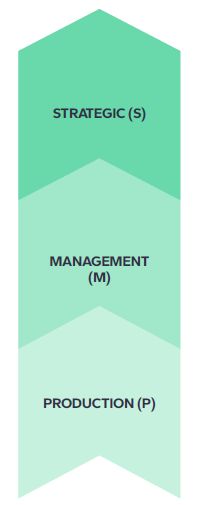
- BIM DirectorResponsible for overseeing the BIM department. (S)
- BIM ManagerIn charge of project management and coordination of all stakeholders, ensuring the application of BIM methodology throughout the project life cycle. (M)
- BIM CoordinatorResponsible for coordinating all the resources and documentation of a BIM project, including equipment, software, and tools. (M)
- BIM TechnicianA specialist in the technical aspects of structures, facilities, or construction. (P)
- BIM ModellerAn expert in project design control and coordination across different phases. (P)
The digitalization of the industry has created a demand for acquiring BIM knowledge that can be applied across various specialties. For instance,
There are roles like Structural BIM Engineer, Facilities BIM Engineer, BIM Architect, Facilities BIM Manager, and Specializing in asset management with BIM.

ADMISSION PROCESS
//
IF YOU WISH TO ENROLL IN A ZIGURAT MASTER YOU MUST TAKE THE FOLLOWING STEPS.
At ZIGURAT, we believe in promoting diversity among professionals by offering scholarship and grant programmes in partnership with academic institutions. Eligible participants who meet the criteria will have access to financial aid and funding to support their professional growth.
Our selection process is based on a candidate’s projection and professional excellence. Since our inception, over 200 students have benefited from our institutional scholarship programme.
1
APPLICATION FOR ADMISSION
Send us your CV and a brief presentation to introduce yourself and highlight your academic and professional achievements.
2
PERSONAL INTERVIEW
Our admissions team will arrange a personal interview with you to learn more about your motivations, goals, and suitability for the programme.
3
SUBMISSION OF DOCUMENTATION
Send us the necessary documentation, including official transcripts, to enable us to assess your application thoroughly.
4
ADMISSIONS COMMITTEE
Our committee will evaluate your candidacy holistically and consider your academic and professional background, experience, and potential for success.
5
RESOLUTION ON THE ADMISSIONS
If you meet our admission requirements, you will be accepted into the programme, and we will notify you promptly.
6
ENROLLMENT
Our advisor will guide you through the enrollment process, including tuition payment and course registration, to ensure a smooth start to your programme.